If you own a home built before the 1920s, there’s a good chance you’re living on a brick foundation. While these vintage foundations have stood the test of time, they eventually need repair.
The Short Answer: Brick foundation repair involves fixing damage to the brick and mortar that support your home. Common repairs include repointing weakened joints and stabilizing settling walls with piers. If you notice cracks, bowing, or water leaks, it’s time to call a professional before minor issues lead to major structural problems.
Let’s explore what you need to know about maintaining and repairing your brick foundation.
What Makes Brick Foundations Different?
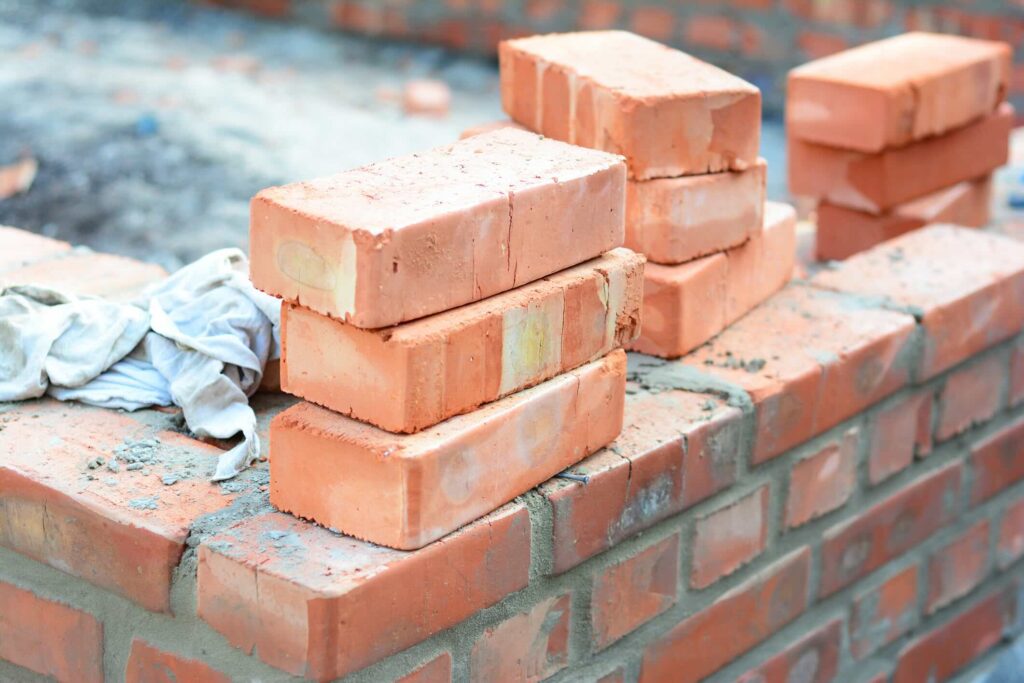
A brick foundation is a foundation built from red brick and mortar. Brick foundations were the most common way of building houses over 100 years ago. Because nobody builds brick foundations anymore, the brick you see on newer homes is merely a veneer. The home’s foundation under the brick veneer is not made from brick.
The bricks used to build brick foundations are made from clay and fired in a kiln to harden them. The bricks used in buildings constructed before 1900 are softer than those used in newer brick buildings because, over time, the kiln firing process improved.
If you own a house with a brick foundation and want to determine the hardness of the bricks, you can use a screwdriver to scratch one of the bricks. The bricks used to build your home are soft if the screwdriver can easily create a mark at least 1/16 inch deep. If the bricks seem impossible to scratch with a screwdriver, they’re hard-fired bricks.
Common Problems That Affect Brick Foundations
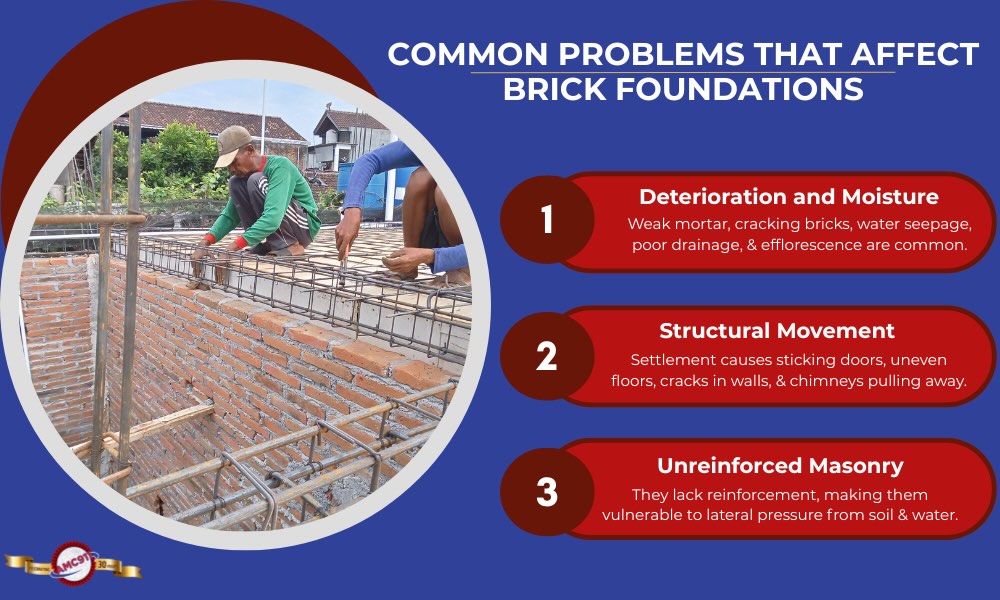
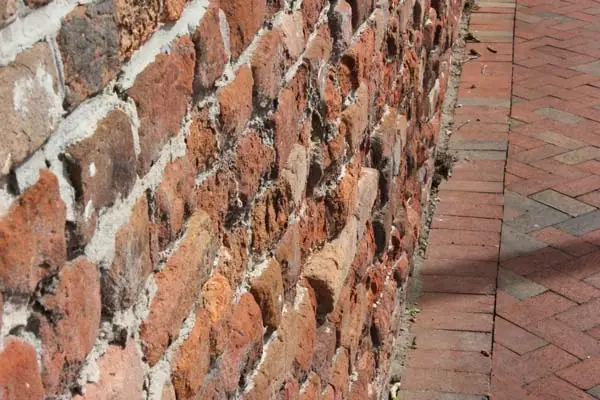
The bricks themselves break down over time
When this happens, you might notice that the surface of the bricks is peeling, cracking, or disintegrating in some way. In extreme cases, the bricks might even turn to powder.
The mortar holding the bricks together breaks down over time
The foundation walls bow inward because of hydrostatic pressure.
The bricks are wet and deteriorating from excess moisture
The interior or exterior foundation walls are coated with cement or paint, and it’s flaking off.
Wet basements
Older homes rarely have a drain tile system installed. Therefore, they frequently have wet basements. We’ll talk more about drain tile systems in just a bit.
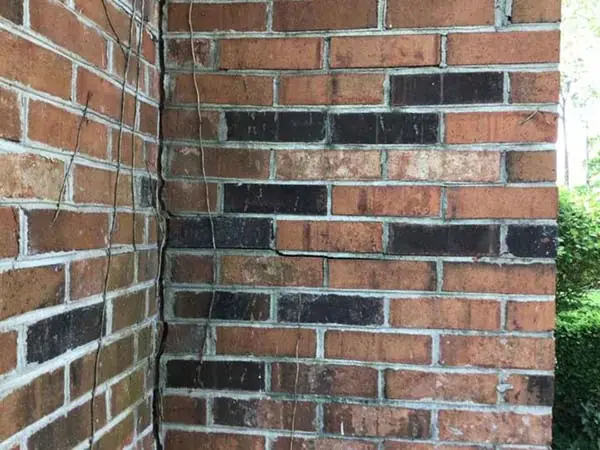
Stair-step cracks in the foundation wall
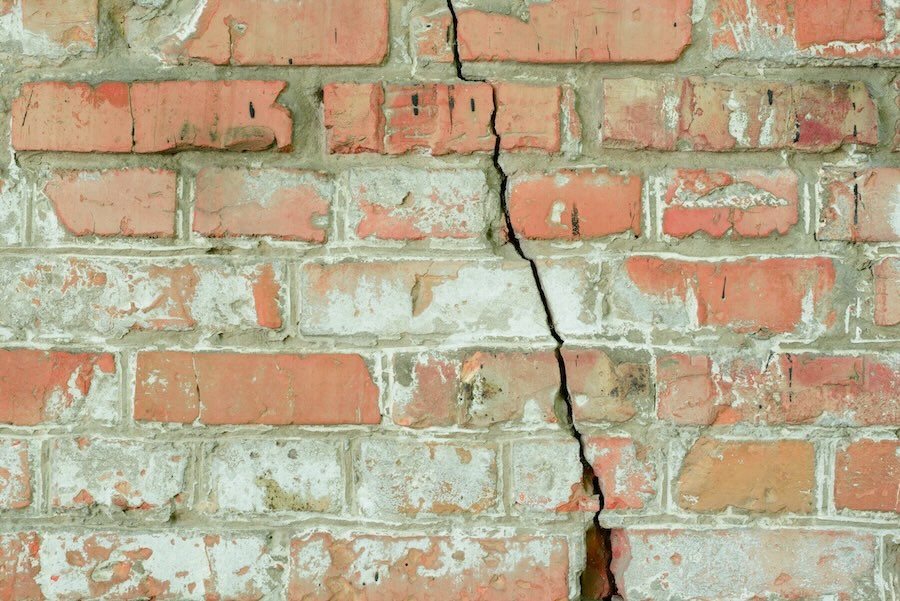
These cracks are a clear warning sign of foundation movement or settling and should be inspected by a professional as soon as possible.
Bricks show signs of mold or moss growth
Persistent dampness allows organic growth to form on the surface, signaling poor drainage or ventilation.
Bricks appear aged and worn
Weathering, discoloration, or surface erosion often indicate long-term exposure to moisture and the need for repair.
Efflorescence on foundation walls
This white, powdery substance might look like mold. However, it’s created when moisture in the bricks migrates to the surface and evaporates.
There’s evidence of differential foundation settlement
Signs of foundation settlement include, but aren’t limited to, windows and doors that no longer open and close properly, wall cracks, floor cracks, ceiling cracks, uneven floors, torn wallpaper, bowed walls, diagonal cracks from the corners of doors and windows, moldings that are no longer in contact with the wall or ceiling, or chimneys and porches that are pulling away from the rest of the home.
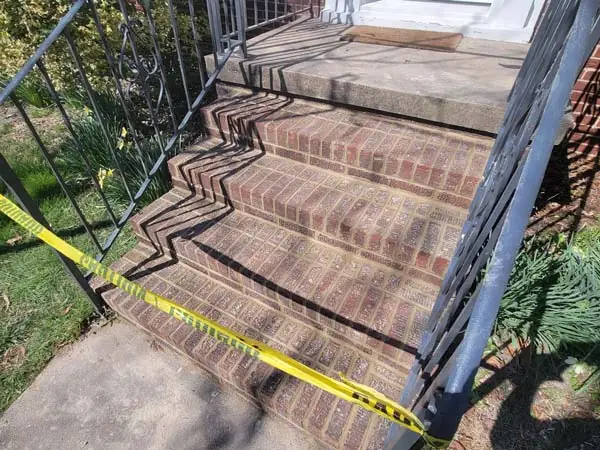
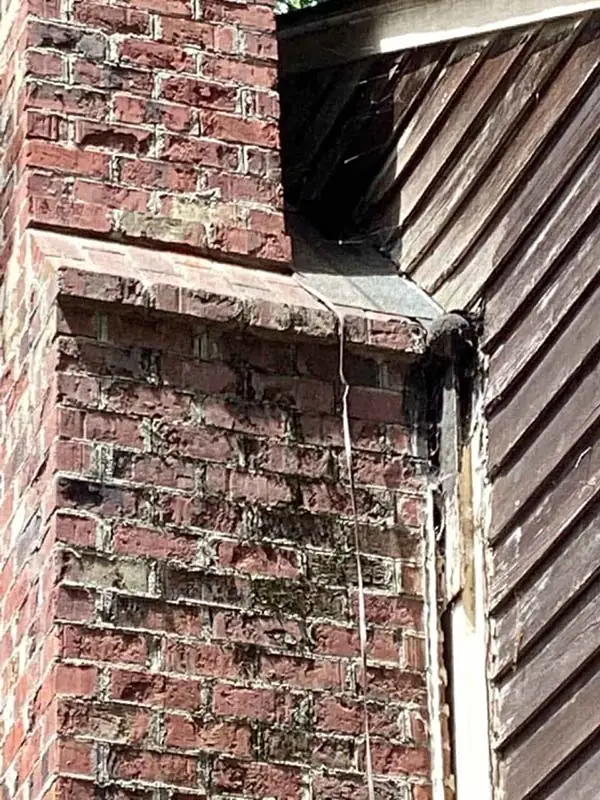
While some of the problems listed above are unique to brick foundations, others are found in non-brick foundations as well. If you see anything suspicious – even something not mentioned here – contact an experienced foundation repair contractor or structural engineer immediately for an inspection. Foundation problems get worse over time if they’re not repaired.

How Are Brick Foundations Repaired?
Most brick foundation problems can be fixed with the right approach. Here’s how foundation contractors tackle common issues:
Mortar Repair and Repointing
When your foundation wall shows signs of mortar deterioration but no structural movement, the solution might be straightforward. A masonry contractor will clean out the damaged mortar joints and repoint them with fresh mortar. This process, called tuckpointing, restores the brick foundation’s strength and prevents water from penetrating through the joints.
Waterproofing and Drainage Systems
Managing water is critical for protecting your brick foundation. Effective repair strategies include:
- French Drain Installation: A perforated pipe system buried around your foundation’s perimeter collects and redirects groundwater before it can build up pressure against your walls.
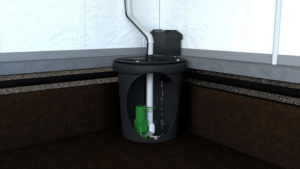
- Sump Pump Systems: When water does accumulate, a sump pump in your basement or crawl space automatically removes it, keeping your foundation dry.
- Vapor Barrier Application: In crawl spaces, a vapor barrier over the dirt floor prevents moisture from rising into the foundation and living areas above.
- Exterior Waterproofing: Applying waterproof coatings to the exterior wall protects brick from moisture penetration while still allowing the interior wall to breathe.
Structural Stabilization Methods
When foundation settlement threatens your home’s structural integrity, you need more than surface repairs. Foundation contractors use several proven methods:
- Steel Piers and Helical Piers: These deep foundation support systems transfer your home’s weight to stable soil or bedrock below. Helical piers work particularly well for brick foundations because they can be installed with minimal vibration and work in various soil conditions. Your foundation contractor might need to pour supplemental footings if the original brick footers have deteriorated badly.
- Wall Stabilization: Carbon fiber straps or wall anchors can stabilize bowing basement walls caused by hydrostatic pressure. These systems prevent further movement and, in some cases, can gradually pull walls back toward their original position.
Specialized Brick Foundation Work
Some repairs require masonry expertise specific to older homes:
- Replacing severely damaged brick sections while matching the original appearance
- Rebuilding masonry chimneys affected by foundation settlement
- Addressing block foundation sections if your home has mixed foundation types
- Repairing or replacing deteriorated brick at ground level where moisture exposure is highest
Complete crawl space encapsulation often accompanies foundation repair, combining vapor barriers, drainage improvements, and climate control to protect your foundation from future moisture damage.
Preventing Future Foundation Problems
Believe it or not, water causes most foundation problems. This is true no matter the foundation type: brick, cinderblock, poured concrete, or something else. Excess moisture in the soil around a foundation can cause a lot of trouble. That’s why controlling groundwater around the home is essential to prevent foundation trouble.
Control Water Around Your Foundation
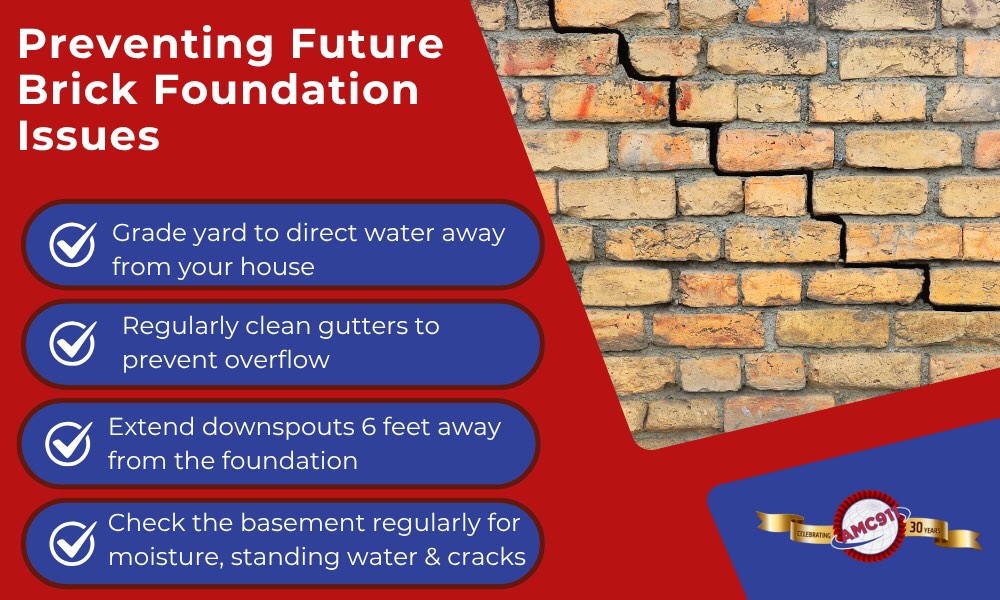
Water causes the majority of brick foundation problems. When soil around your foundation stays saturated, hydrostatic pressure, which is the force exerted by standing water pushing against your foundation walls, builds and pushes against your foundation wall. You can prevent this by:
- Ensuring proper yard grading so water flows away from your house, not toward it
- Cleaning gutters regularly so water doesn’t overflow near your foundation
- Extending downspouts at least 6 feet from your foundation
- Installing or maintaining drain tile systems around your foundation’s perimeter
- Keeping plants and landscaping away from brick walls to avoid overwatering the foundation area
Monitor Your Crawl Space and Basement
Check your crawl space and basement regularly for signs of moisture, standing water, or new cracks. Keeping these areas properly ventilated (or fully encapsulated, depending on your foundation contractor’s recommendation) helps prevent moisture-related damage to your brick foundation.
Schedule Regular Inspections
Have a qualified foundation contractor or masonry expert inspect your older home every few years. Professional eyes can spot potential issues before they become serious foundation problems. Many companies offer free estimates and will point out concerns even if you’re not ready for repairs yet.
Regular maintenance protects both your structural integrity and curb appeal, keeping your historic brick wall looking good while performing its job of supporting your home.
Finding the Right Foundation Repair Partner
Not all foundation repair companies have experience with brick foundations. When searching for help, look for these qualities:
Specialized Experience: Choose a foundation contractor who regularly works on older homes and understands the unique challenges of brick foundation repair. Ask about their experience with homes from your era.
Engineering Capabilities: The best foundation repair companies have in-house engineers who can design solutions specific to your foundation problem. This engineering expertise matters more with brick foundations because each repair must account for the material’s unique properties.
Comprehensive Services: Look for contractors who handle everything from crawl space waterproofing to basement work to structural repairs. A company that offers free estimates and can address multiple foundation issues saves you from coordinating between different contractors.
Why Local Expertise Matters
Here in Hampton Roads, foundation issues often stem from our coastal location and unique soil composition. For over 30 years, homeowners in Virginia have turned to experienced professionals who understand these regional challenges. The right foundation repair company brings together the engineering knowledge, masonry skills, and waterproofing expertise your brick foundation needs.
Quality foundation contractors employ uniformed, background-checked professionals and use their own in-house crews rather than subcontractors. This direct oversight ensures consistent workmanship and accountability. Look for companies with strong Better Business Bureau ratings and proper licensing for your state.
When you work with a foundation repair company that has dedicated their career to protecting older homes, you’re not just getting a repair. You’re getting peace of mind that your home’s foundation will support your family for generations to come. Contact us today for a free inspection!