Looking for information about helical piers? If so, you’ve landed on the right page because that’s what we’re going to review in this article.
What Are Helical Piers?
Helical piers – also known as helical piles, screw piles, and helical anchors – are a type of deep foundation system designed to provide a reliable, stable base for buildings and other structures.
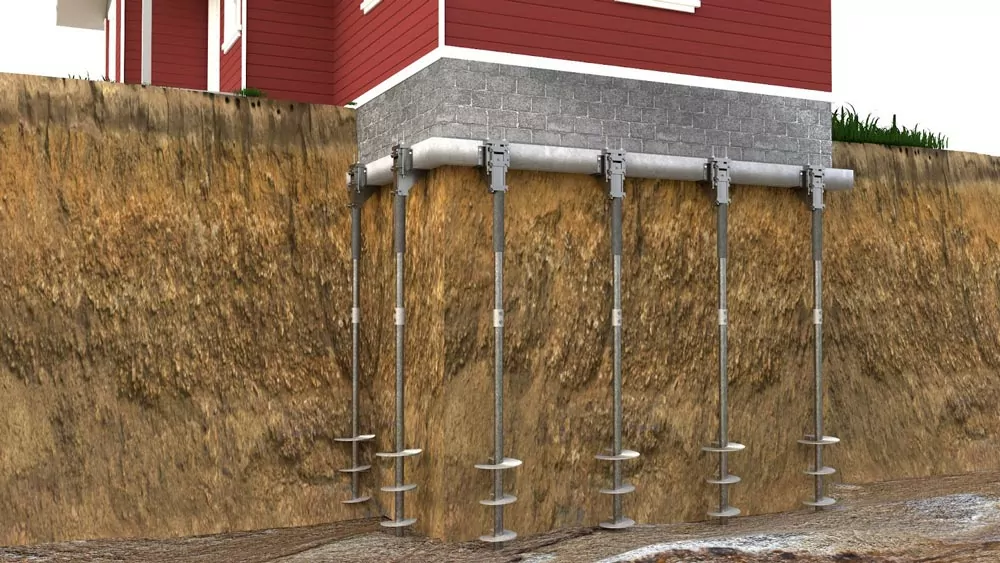
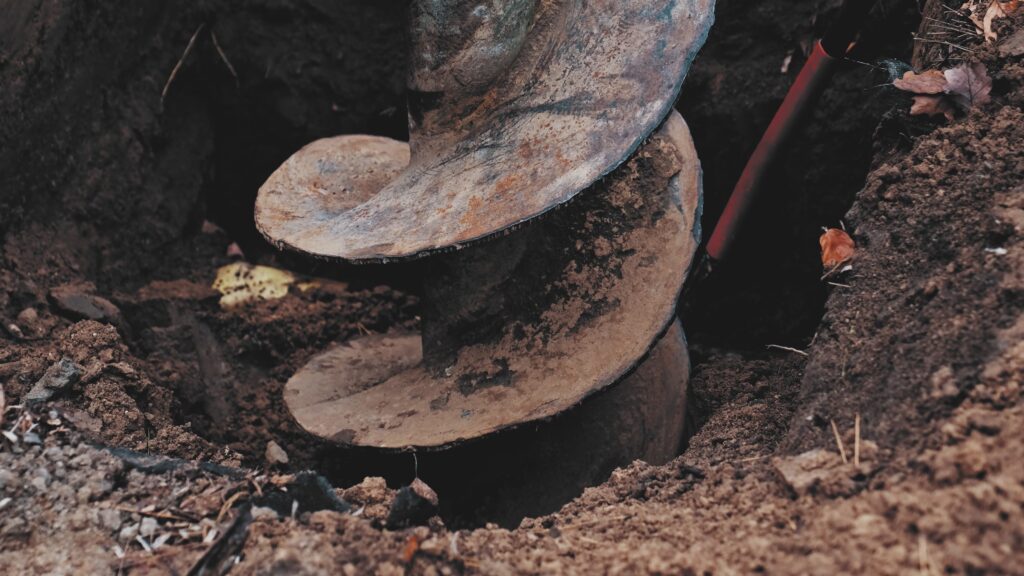
Helical piers resemble giant corkscrews and consist of a steel shaft with one or more helical plates. The helical shape of the plates allows them to be turned into the soil, effectively generating a strong, stable anchor for the foundation above.
Helical piers are used for new construction projects requiring a deep foundation system and for existing structures that need stabilization, including residential foundations, decks, garages, and porches.
When Are Helical Piers Used?
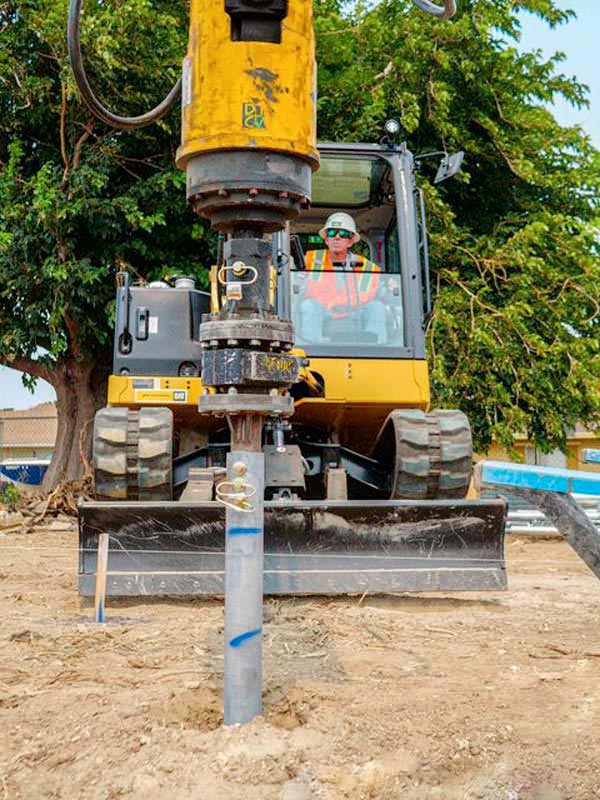
- New Residential and Commercial Buildings – Helical piers are widely used in building construction to provide a solid foundation for residential and commercial structures. These foundation systems are ideal for sites with problematic soil conditions.
- Boardwalks and Bridges – Helical piers are commonly used to construct boardwalks and bridges to provide support and stability in wetland areas or environments subject to flooding.
- Solar Panel Installation – Helical piers are sometimes used to install solar panels, particularly in sandy or silty soil conditions.
- Foundation Repair – Helical piers are also used to reinforce existing foundations that are experiencing settlement.
How Are Helical Piers Installed to Repair an Existing Foundation?
- Site preparation – The site must be adequately prepared before installing helical piers. This involves removing debris, rocks, or other obstructions and excavating the soil to expose the footing. The excavation must be wide enough to allow room for the installation equipment.
- Placement – The helical piers are typically placed at intervals of 6 to 8 feet along the foundation wall. They are turned into the soil until they reach the required depth, and then brackets are installed.
- Raising the foundation – Once the helical piers are in place, the foundation can be lifted as much as possible without causing damage. The foundation can often be raised enough to close cracks, allow windows and doors to function properly, etc.
Benefits of Helical Piers
- Versatility – Helical piers can be used in various residential, commercial, industrial, and civil engineering projects. This includes new construction projects and the stabilization of existing structures. Helical piers are also suitable for different soil types and ground conditions, including hard soils, soft soils, and waterlogged areas.
- Resilience – Helical piers are designed to withstand high loads and resist settling, heaving, and other soil movements. They are ideal for areas with seismic activity, expansive soils, or moisture fluctuations.
- Speed and efficiency – Helical piers are installed quickly and easily using hydraulic machinery. This reduces installation time and minimizes site disruption.
- Low environmental impact – Helical piers do not require excavation or soil disturbance, which reduces the environmental impact. They’re also reusable and recyclable, which promotes sustainability.
- Cost-effectiveness – Helical piers are a cost-effective alternative to traditional foundation systems. They require fewer materials, labor hours, and equipment, which lowers the overall project cost.
- Longevity – Helical piers have a long service life and require little maintenance or repairs.
Signs Your Foundation Might Need Helical Piers
Signs a foundation may require helical piers include, but aren’t limited to, the following:
- Wall cracks – If you notice horizontal, stair-step, or vertical cracks in your home’s walls, it could indicate a foundation problem.
- Floor and ceiling cracks – Watch out for cracks that run across the ceiling and down a wall.
- Uneven floors – If your floors are sloping or sagging in certain areas, this could indicate a foundation problem. For more information, see Why Does My Floor Feel Uneven When Walking On It?
- Doors and windows that don’t open and close properly – If you force doors or windows to open or close, it could indicate a foundation problem.
- Gaps between walls and the ceilings or floors – If you notice gaps between your walls and ceilings or floors that weren’t there before, it could indicate a foundation problem that needs to be addressed.
- Stair step cracks in brick or masonry – This is a sure sign of foundation movement.
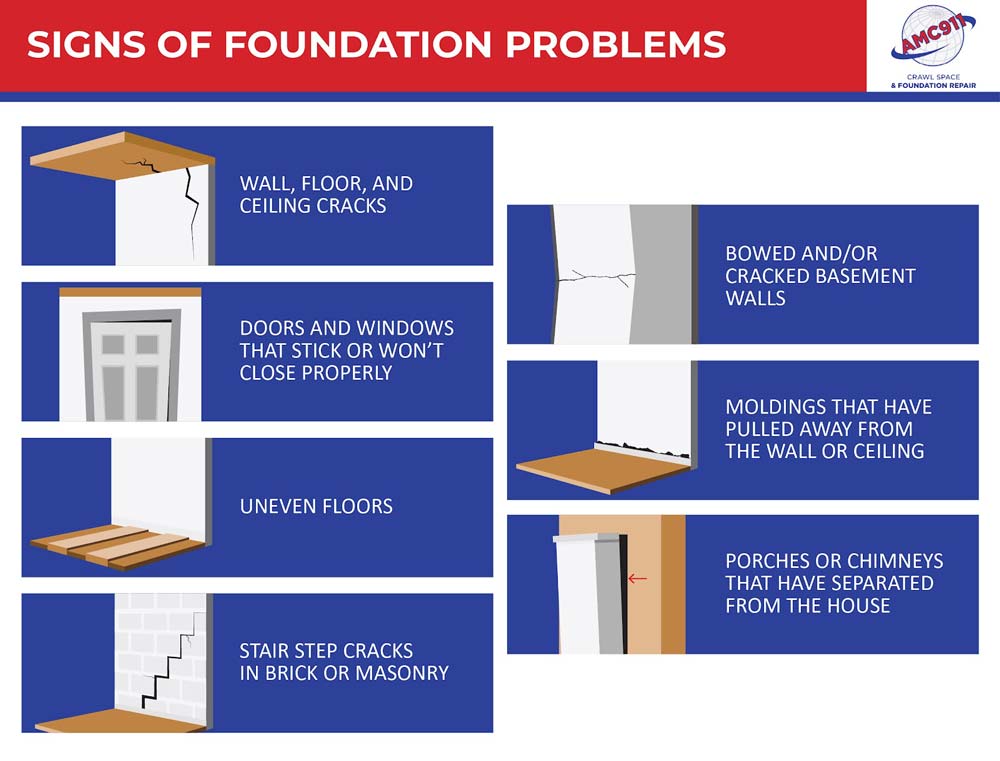
Don’t wait to contact a foundation repair professional if you notice any of these signs – or anything else that strikes you as suspicious. Foundation problems never get better. They always worsen. If you act fast, you’ll save money.
How Much Do Helical Piers Cost?
The cost of helical piers varies depending on several factors, including the complexity of the installation, the size of the structure that needs to be supported, how many piers are required (and their size), soil type, and geographical location. Some areas may have a higher demand for helical piers, which can affect the price. On average, the price of helical piers ranges from $2,000 to $4,000 per pier, but the total cost can be higher if additional expenses are involved.
What Causes Foundation Problems?
Differential settlement is the leading cause of foundation trouble. It occurs when different parts of a building’s foundation settle into the ground at different rates due to underlying soil conditions. Differential settlement places enormous stress on a foundation; if it isn’t corrected, it can lead to severe structural damage.
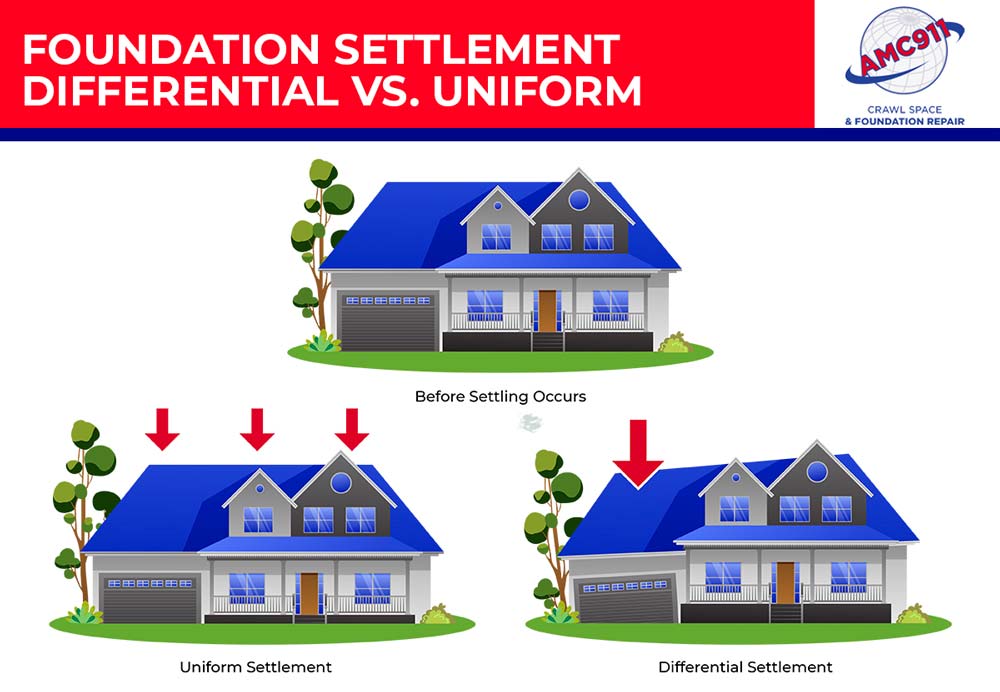
So, what causes differential settlement?
Various factors, including the following, can cause differential settlement:
- Expansive soil – Clay-rich expansive soil can wreak havoc on a building’s foundation. As the name suggests, this soil type swells when it absorbs water and shrinks when it dries out. These changes in volume create movement under the foundation and can eventually lead to differential settlement.
- Erosion-prone soil – Other types of soil are prone to erosion. If the soil under the foundation is washed away, voids could form. If the foundation settles into the voids, there will be differential settlement.
- Seismic events – We probably don’t need to explain how earthquakes or tornados can cause movement under the foundation, leading to differential settlement.
- Poor site preparation – The soil needs to be adequately tamped down before construction starts. Inadequate soil compaction can cause the foundation to settle unevenly into the ground after construction, resulting in foundation settling and damage.
If you have questions about helical piers for foundation repair, contact AMC911 today to schedule a foundation evaluation. If we find a problem, we’ll give you a repair estimate.