
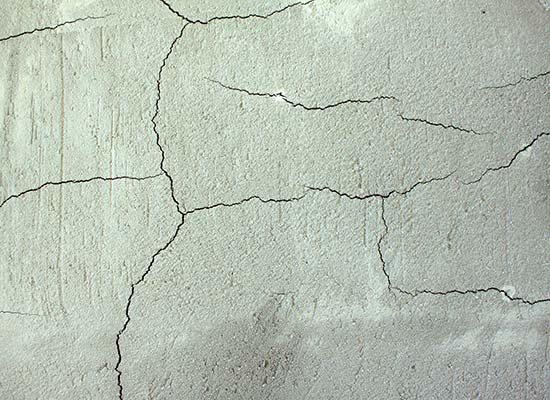
The Short Answer: Large cracks in a concrete garage floor are typically caused by differential foundation settlement, which occurs when weak or unstable soil causes the foundation to sink unevenly. These structural cracks require professional repair, but can be prevented by controlling groundwater around foundations through proper drainage and gutter maintenance.
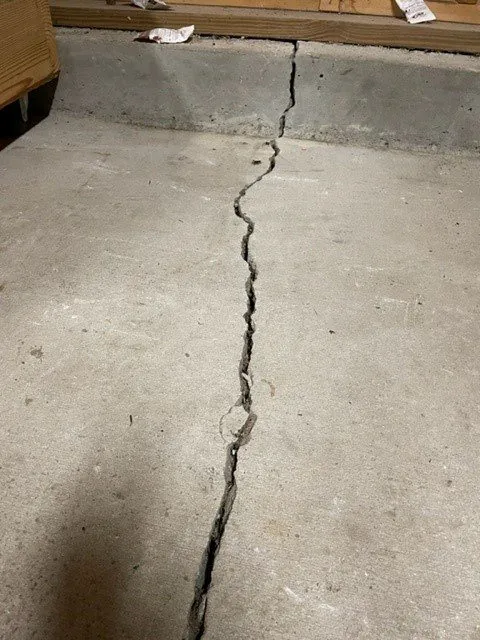
While cracked garage floors are pretty much a fact of life, large cracks in a concrete garage floor are not normal. If you have one of those, you have a problem. The good news is that large concrete cracks can be fixed, but it’s not a DIY project. A foundation repair professional is the best person to handle a garage floor repair job.
What Causes Large Cracks In a Concrete Garage Floor?
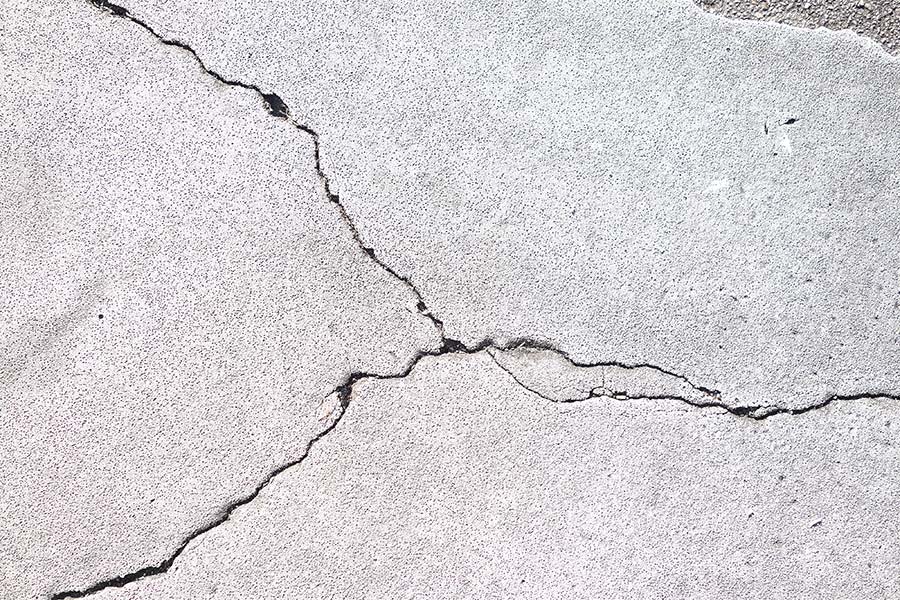
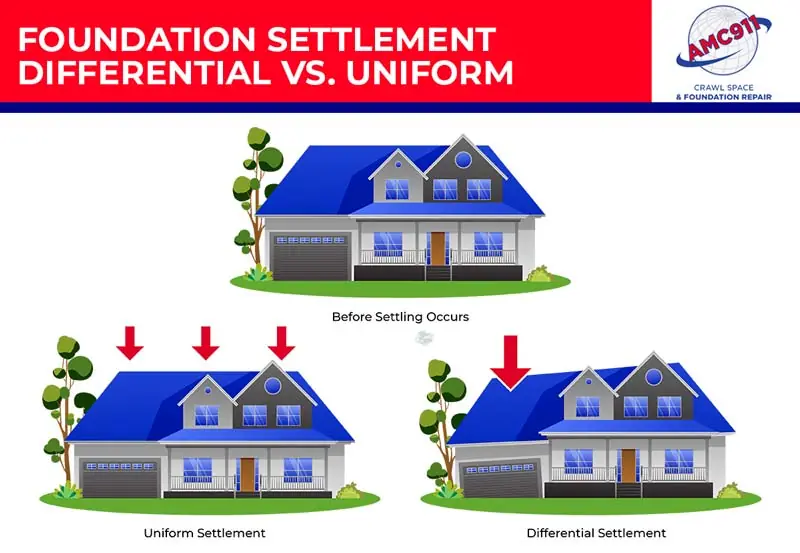
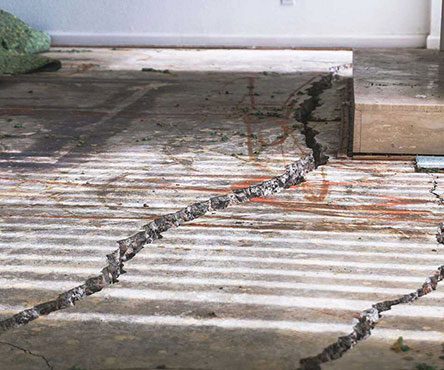
Large cracks in a garage’s concrete floor are not surface-level. They are usually caused by differential foundation settlement. Differential settlement happens when the soil under a foundation is weak or unstable. This causes the foundation to settle into the ground, creating uneven surfaces. Differential settlement puts a lot of stress on the foundation and could result in a cracked garage floor. In other words, a large crack in concrete flooring means there’s an underlying problem with the foundation’s structural integrity.
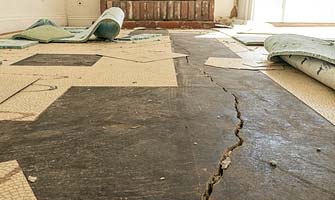
Differential settlement can be caused by various things, including:

- Inadequate Soil Tamping: If the soil under the garage's foundation wasn't adequately compacted before the foundation was built, the structure will settle into the soil later, usually unevenly. This is differential settlement. needs to be tamped down before anything gets built on top of it. If this isn’t done, the structure will settle into the soil later, usually unevenly. This is differential settlement.
- Expansive Soil Problems: Soil with a lot of clay in it is called “expansive” because it expands when it soaks up moisture and then shrinks when it dries out. This swelling-shrinking cycle is usually seasonal and creates movement in the soil under the foundation. Over time, this could lead to differential settlement, leading to a big crack across your garage floor.
- Digging Next to the Foundation: If there’s heavy excavation going on next to the garage, it might have destabilized the soil under the garage’s foundation. This, in turn, destabilized the foundation and caused a crack to form in the garage floor.
- Seismic Activity. Earthquakes can destabilize a foundation and cause a garage floor to crack.
- Weather Changes: For example, if the garage’s foundation was built on top of expansive soil during the dry season, when the wet season comes around again, the soil will swell, pushing up on the slab, which could cause the floor to crack.
Cracks caused by differential settlement are structural. In other words, they affect a foundation’s structural integrity and are usually “active” in that they get bigger. They might even open and close with the seasons.
Of course, not all cracks in a garage floor are structural. Some are just hairline cracks caused by concrete shrinkage during the concrete curing process. You might not like how they look, but they’re not affecting the foundation’s structural integrity under the garage.
For more information, visit Normal Foundation Cracks: Is There Such a Thing?
Professional Repair for Cracked Concrete Floor
At AMC911, we use carbon fiber to repair large cracks in a concrete surface. Carbon fiber is a flexible but extremely strong material that’s used in the construction of commercial aircrafts. This long-lasting solution will stabilize a large crack in a concrete garage floor and protect the foundation from further damage. Slab piers and polymer foam injections are also used if the foundation under the garage is heavy enough.
Is Fixing Large Cracks a DIY project?
A large crack is always structural, so you’ll need to call a foundation professional for concrete repair services. If that is a non-structural crack, you could probably fix it yourself.

How To Prevent Large Garage Floor Cracks
The best way to prevent large cracks in your concrete garage floor is to prevent differential settlement, and the best way to prevent differential settlement is to control groundwater around your foundation.
Controlling groundwater is important because most foundation problems – including differential settlement – are caused by water. When there’s too much or too little of it in the soil around a foundation, you will eventually have trouble. Fortunately, controlling groundwater around a foundation isn’t that hard. Here are a few things you can do:
- Make sure your yard slopes away from the foundation – A yard that slopes toward the foundation will cause water to drain toward the foundation. If you suspect your yard isn’t sloped away from the garage’s foundation enough, you can either fix this yourself or ask a professional landscaper for help. Sometimes foundation repair contractors will help with this, but not always.
- Make sure your gutters aren’t clogged – Clean your gutters regularly, because gutters clogged with leaves and debris will cause water to spill over the side of the garage and soak into the ground around the foundation.
- Install downspout extensions, if necessary – Short downspouts will dump water close to the foundation, where it will sink into the soil. Downspout extensions are inexpensive, easy to install, and will carry water away from the foundation before releasing it.
- Keep flowers, shrubs, trees, and other vegetation away from the garage – You don’t want an excuse to pour more water into the soil around the garage’s foundation.
- Install a French drain in your yard – French drains are shallow, gravel-lined trenches. They’re great for channeling excess water away from foundations.
For more information about concrete floor repair, check out our complete foundation cracks guide.
Find Expert Solutions for Concrete Garage Floor Cracks with AMC911
If you have a large crack in your garage floor and you’re located in Hampton Roads and the surrounding areas, contact AMC911 today. Our experts will come out for an inspection, identify the best concrete garage floor repair solutions, and give you a free estimate.