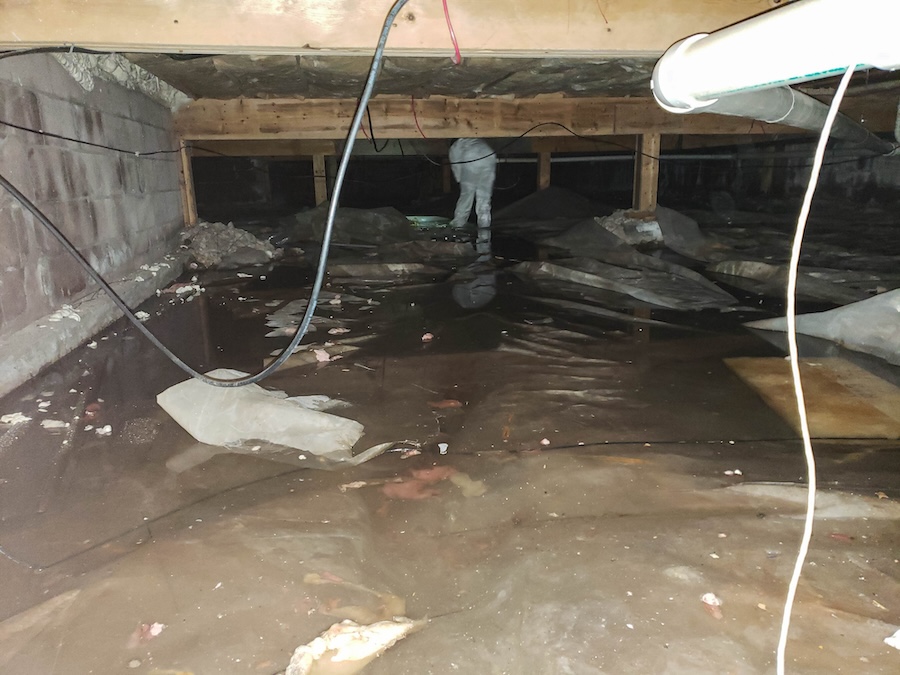

The Short Answer: Water in the crawl space after heavy rain is common, but it’s not normal. It usually indicates drainage issues, poor grading, or a high water table, all of which should be addressed to prevent long-term damage.
What Is a Crawl Space and Why Does It Matter?
A crawl space is the open area beneath your home, usually 1.5 to 3 feet tall, created when a house is built on a raised crawl space foundation. This small space allows access to plumbing and electrical lines and can even offer limited storage if the space is fully protected with crawl space encapsulation and a high-quality vapor barrier.
The problem? A crawl space is highly vulnerable to moisture, especially in rainy seasons or flood-prone areas. Once moisture gets inside, it sets the stage for mold growth, wood rot, pest infestation, and costly repairs.
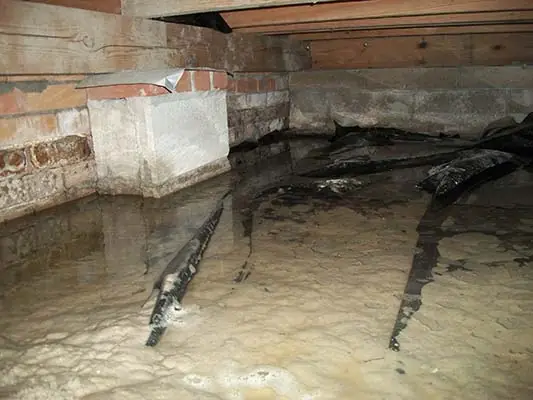
Is Water in a Crawl Space After Heavy Rain Normal?
It’s common to see water after a storm, but it’s never normal. When you find water after heavy rain, your crawl space is telling you that the soil around your foundation isn’t draining the way it should.
This may be caused by:
- Poor drainage
- Soil erosion
- A high water table
- Short downspouts
- Saturated surrounding soil
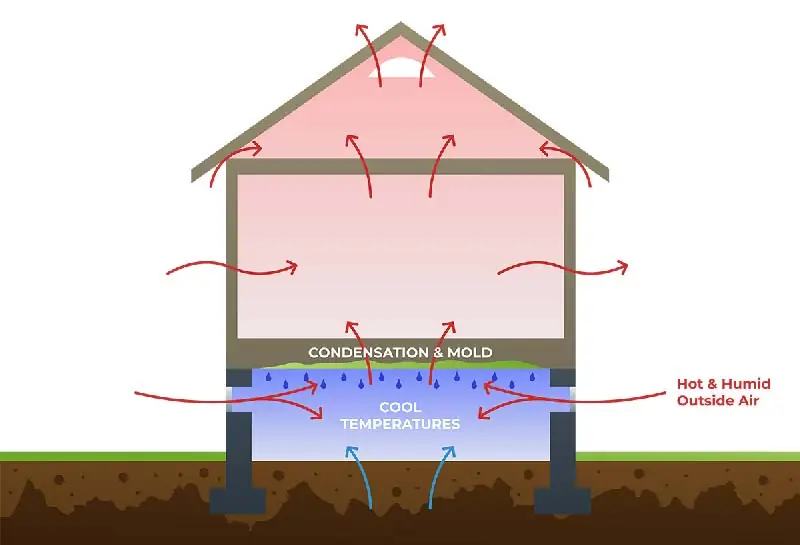
Left unaddressed, surface water and groundwater can damage your foundation wall, attract pests, and push humidity into your home through the stack effect, carrying moldy, musty air right into your living spaces.

How Water Enters a Crawl Space
Moisture can make its way into the crawl space in several ways:
Plumbing Leaks
If the water is directly under a bathroom or kitchen, you may have a water leak or plumbing leak. This is usually easier to fix than groundwater intrusion.
Excess Moisture in the Surrounding Soil
Waterlogged soil around the home can seep into the crawl space. Causes include incorrect grading, clogged gutters, poorly designed drainage, a high water table, and torrential heavy rain.
Hydrostatic Pressure
When soil becomes saturated, hydrostatic pressure forces water through even tiny cracks in the foundation wall. This pressure can create new cracks, push water into the crawl space, and cause the entire area to remain damp long after the rain stops.
Once inside, that lingering dampness begins the drying process, which raises humidity and encourages mold, mildew, and musty smells.
Warning Signs of a Wet Crawl Space
You may have a moisture problem if you notice:
- Warped hardwood floors
- Visible wood rot
- Damp or damaged wooden beams or floor joists
- Signs of termites or other insects drawn to moisture
- A lingering musty smell
- Allergy flare-ups due to mold spores
- Higher humidity inside the home
- Visible mold growth
- Soil erosion beneath the crawl space foundation
When ignored, these issues can snowball into major structural problems, leading to uneven floors, cracked walls, and a weakened home’s foundation.

How a Wet Crawl Space Can Damage Your Home
Even minor moisture problems can lead to major issues if left untreated:
Structural Weakening
Excess moisture causes wood rot, weakening the supports that hold your home up. Over time, this can cause settlement, sagging floors, and other costly structural failures.
Poor Indoor Air Quality
Thanks to the stack effect, air moves upward from the crawl space into your home. If your crawl space contains mold spores, excess humidity, or pest droppings, that unhealthy air is carried into your living spaces.
Pest Infestation
Termites, rodents, and wood-destroying insects thrive in damp, unprotected crawl spaces. Their presence increases the risk of structural damage and health concerns.
Foundation Problems
Saturated soil can shift or wash away, causing piers to sink and weakening your home’s structural stability.
How to Prevent Water and Moisture in the Crawl Space
The most effective way to keep your crawl space dry is to control groundwater and remove excess water before it becomes a problem.
Install a French Drain and Sump Pump System
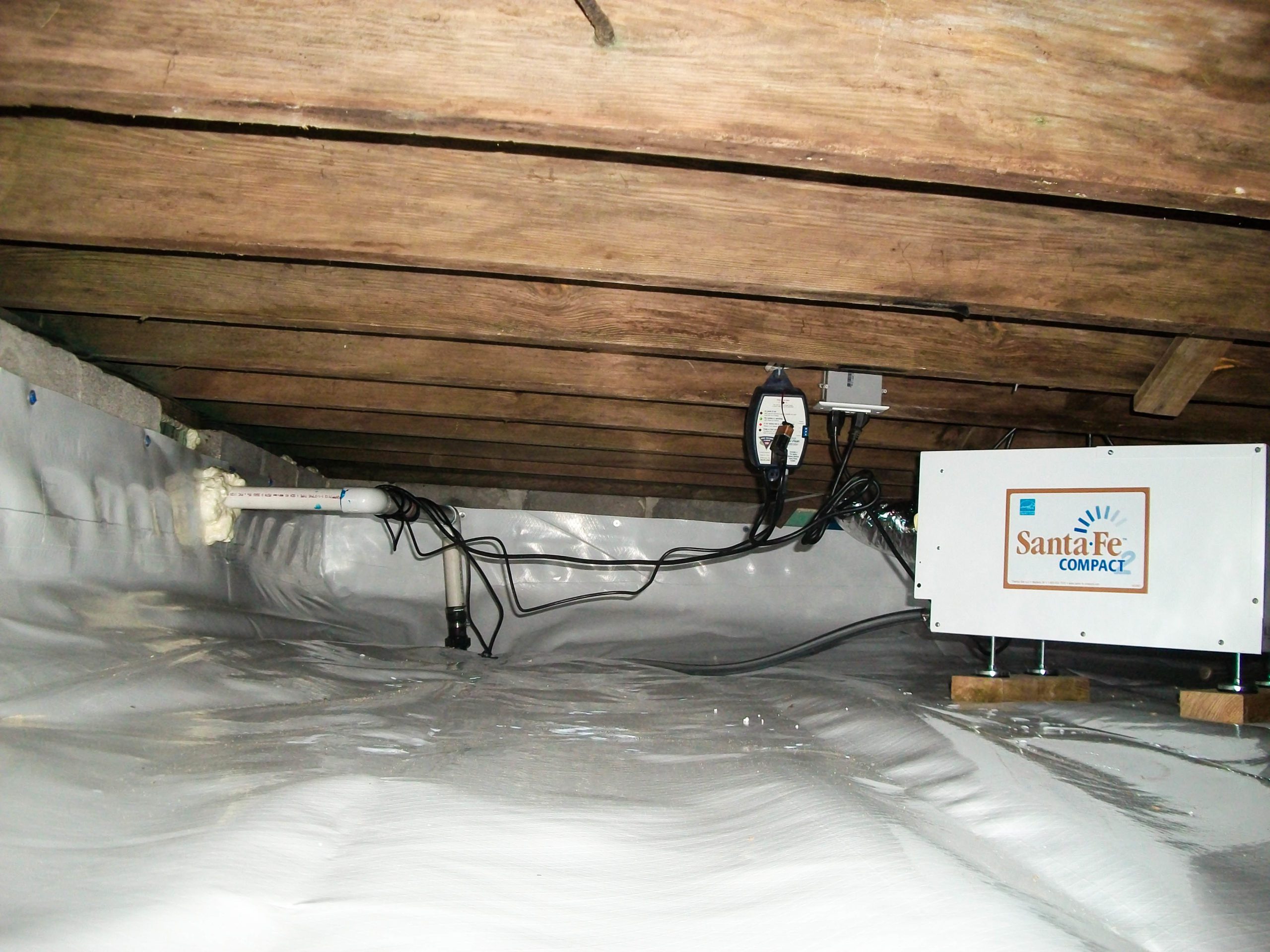
A French drain, built with a buried perforated pipe, captures and redirects groundwater into a sump pit. From there, a sump pump removes the water and discharges it away from the home’s foundation.
Sump pump installation is one of the most reliable ways to prevent future flooding, especially in homes with a high water table.
Encapsulate the Crawl Space
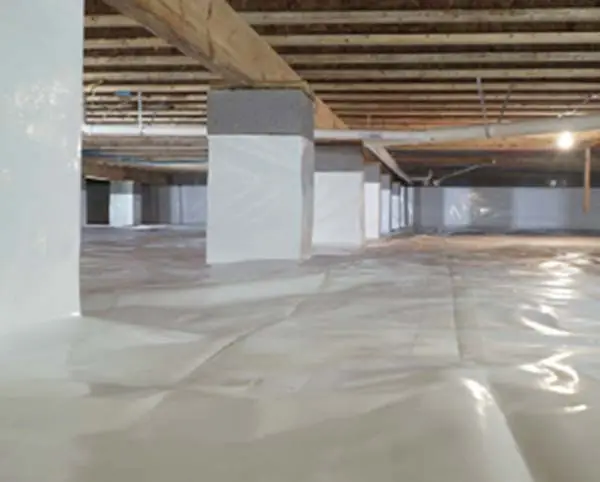
Crawl space encapsulation involves sealing the area with a thick vapor barrier, covering the floors and walls to prevent moisture from entering. Encapsulation often includes a dehumidifier to maintain a dry crawl space and reduce humidity long term.
This process:
- Prevents mold growth
- Reduces humidity
- Stops musty smells
- Protects the structure from wood rot and pest infestation
- Improves indoor air quality
Additional Ways to Control Water Around the Foundation
To support a healthy, dry crawl space, consider:
- Regrading your yard to move surface water away
- Keeping gutters clean
- Adding downspout extensions
- Installing underground downspouts with bubbler pots
- Avoiding water-hungry plants near the foundation
- Applying exterior waterproofing membranes
- Installing vent covers
- Using mold fogging to remove existing mold spores

Time for a Crawl Space Check?
If you’re noticing signs like musty smells, warped floor joists, visible mold spores, or excess moisture beneath your home, don’t wait. A damp or wet crawl space can quickly lead to wood rot, pest infestation, and serious structural damage to your home’s foundation. That’s why it pays to act now, before a small issue becomes a costly repair.
AMC911 Foundation & Crawl Space Repair, serving the Hampton Roads area, offers full-service solutions tailored to crawl spaces and foundation health:
- Crawl space repair and crawl space encapsulation, including installing a high-quality vapor barrier and sealing the area to stop excess moisture, improve indoor air quality, and keep mold spores in check.
- Professional sump pump installation and French drain systems (including perforated pipe drain tile) to manage groundwater, groundwater pressure, and surface water that can threaten the foundation wall.
- Foundation repair services, including structural inspections by in-house engineering, to ensure your home’s foundation wall, piers, and supporting structures remain strong when exposed to damp soil and standing water.
- Full waterproofing solutions: exterior waterproofing, interior waterproofing, surface water drainage and collection, all designed to protect crawl spaces, foundation walls, and your home’s overall health.
Why Choose AMC911?
With nearly 30 years of experience in Hampton Roads, AMC911 brings reliable, clear communication and engineering-backed solutions, not high-pressure sales tactics. Don’t wait until flooding, mold growth, or structural failure forces your hand. Reach out today for a free crawl space inspection and let us evaluate your property’s specific risks. Protect your investment and secure your home for the long term. Contact us today for help!