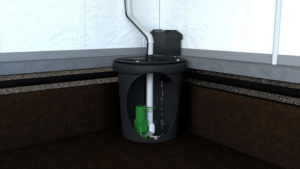
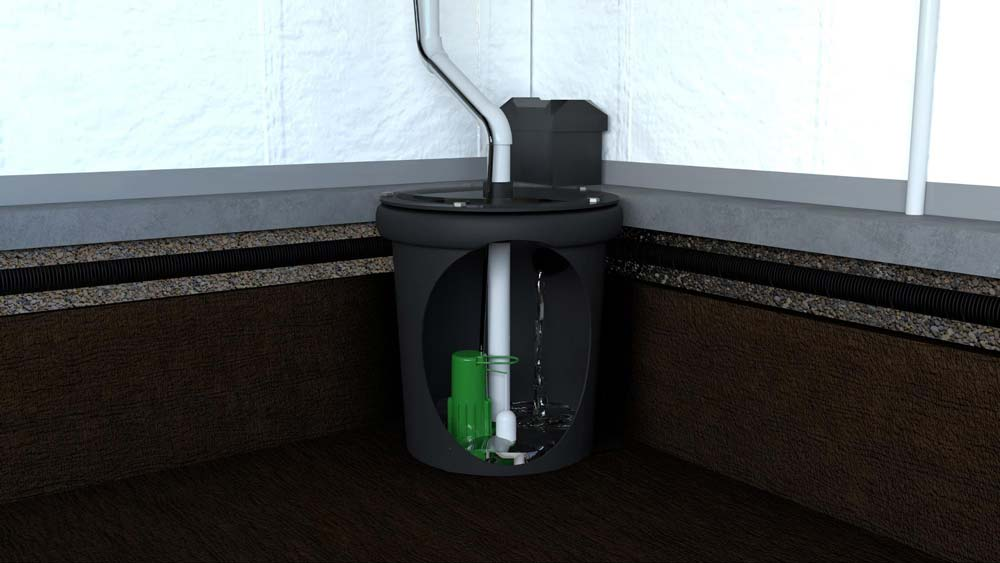

Quick Description: A sump pump is a mechanical device installed in a sump pit, also called a sump basin, at the lowest point of a basement floor or crawl space. Water may enter the sump pit through a foundation or perimeter drain or collect there from groundwater seepage. As the water rises, a float switch or another type of water-level sensor activates the pump automatically. The pump then pushes the water through a discharge pipe to a safe discharge location away from your home.
How Does a Sump Pump System Work?
Have you ever looked into your crawl space after a Hampton Roads downpour and found standing water on the basement floor? Installing a sump pump could save you thousands in repairs. Think of it as an automatic bailing bucket for the lowest point of your home. It sits quietly until water shows up, then moves the water somewhere harmless.
The Basic Components
Most residential sump pump systems include several basic components:
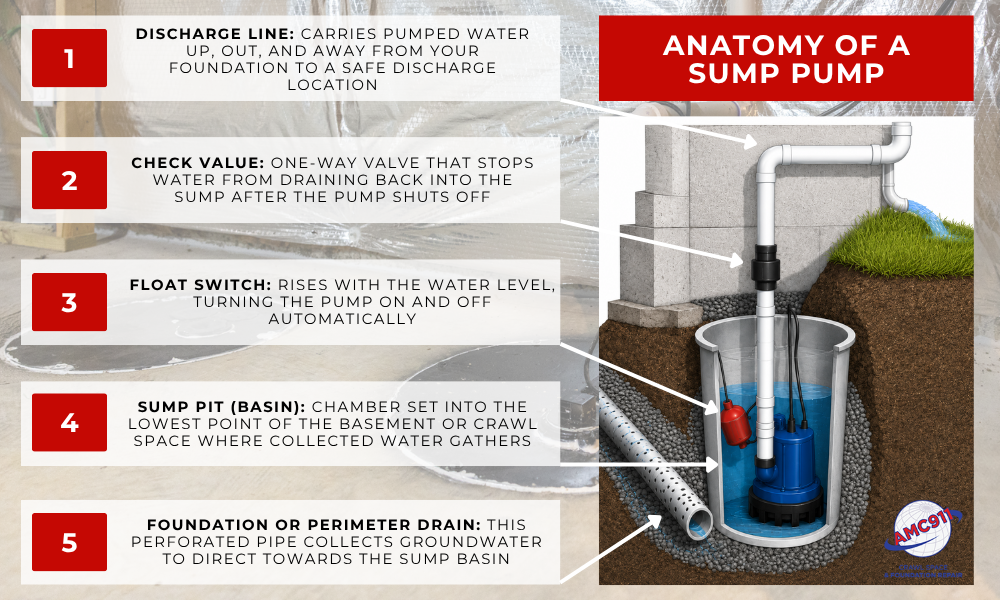
- Foundation or Perimeter Drain: When included, this perforated pipe collects groundwater around the foundation and directs it toward the sump basin. AMC911 installs these through our drain tile waterproofing systems and interior waterproofing services.
- Sump Pit: Also called a sump basin, this is the chamber set into the lowest point of the basement or crawl space where collected water gathers.
- Float Switch: The switch rises with the water level, like the float in a toilet tank, turning the pump on and off automatically.
- Check Valve: A one-way valve that stops pumped water from draining back into the sump after the pump shuts off.
- Discharge Line: The piping that carries sump pump water up, out, and away from your foundation.
How the System Moves Water
During heavy rainfall, the foundation drain funnels rising groundwater into the sump. When it reaches a set level, the float switch trips and the pump kicks on, pushing water through the discharge pipe before it pools on the basement floor.
The cycle runs automatically, which is what makes a sump pump system so valuable to a property owner; it works even when nobody is home to notice the storm.
Submersible and Pedestal Designs
Most homes use one of two designs:
- Submersible Sump Pump: A submersible pump sits inside the basin and runs underwater. Its sealed motor keeps it quiet, which can be helpful when beneath a finished room rather than an unfinished basement.
- Pedestal Sump Pump: A pedestal pump mounts its motor above the water. The exposed motor is easier to access for inspection and service, but pedestal models generally produce more noticeable operating noise.
Submersible pumps are generally quieter, while pedestal pumps are easier to access and often cost less. The expected lifespan of either design depends on the pump’s construction, installation, workload, and maintenance. Many residential sump pumps use 1/3 or 1/2 horsepower motors. Choosing between a submersible sump pump and a pedestal sump pump comes down to noise, budget, and placement.
A backup pump is strongly recommended. A backup pump can take over when the power fails or the primary unit clogs. Battery backup models are the most common choice, though water-powered options exist. If outages hit your street regularly, a battery backup is a common protective upgrade.
When Does Your Home Need a Sump Pump?
Water problems rarely announce themselves all at once. They often appear through small warning signs, and recurring moisture problems may worsen when not corrected.
Warning Signs to Watch For
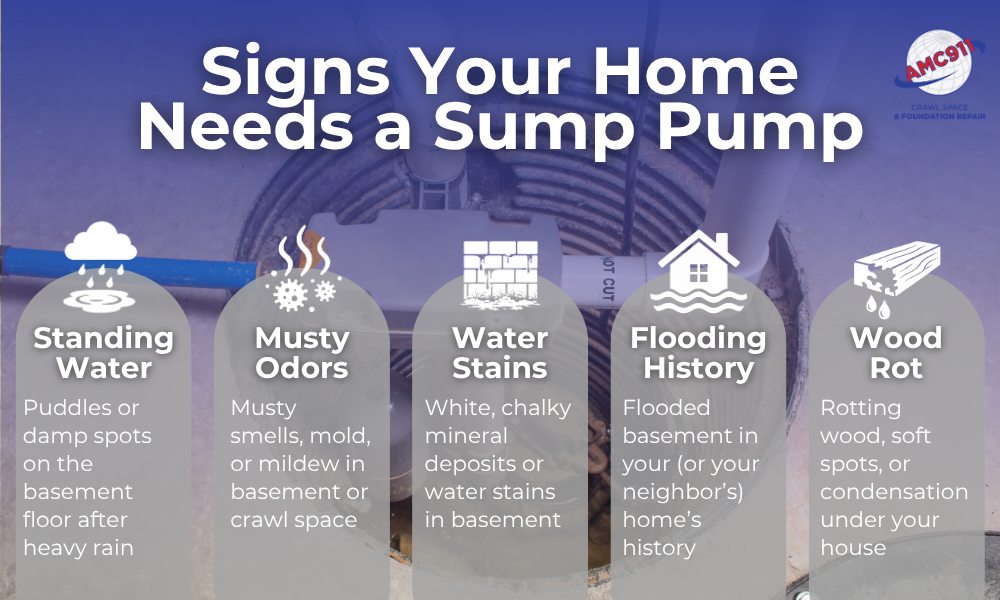
- Standing water or damp spots on the basement floor after heavy rain
- Musty odors, mold, or mildew in the basement or crawl space
- Water stains or efflorescence, the white mineral deposits water leaves on walls
- A flooded basement in your home’s history, or in your neighbors’
- Wood rot or condensation under the house
If you notice any of these signs, or anything else that strikes you as suspicious, don’t wait to contact a professional. Moisture problems worsen over time; if you wait, you’ll pay more. AMC911’s crawl space waterproofing team can tell you quickly whether a sump pump belongs in your plan.
Why Hampton Roads Homes Face Higher Risk
Parts of our region have a shallow slope and recurring exposure to heavy rain, high tides, and storm surge. Coastal storms and nor’easters can drop several inches of rain in an afternoon, creating weather conditions that push groundwater toward foundations across Virginia Beach, Norfolk, Chesapeake, and beyond.
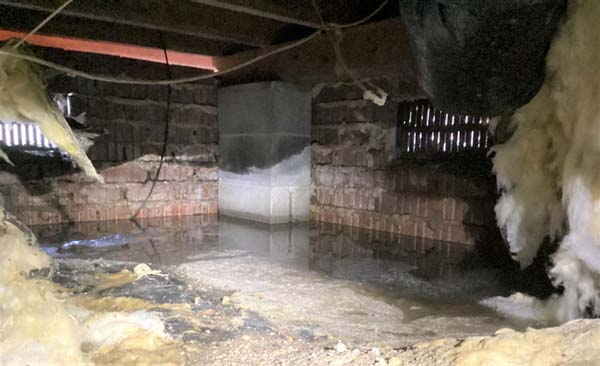
Homes with crawl spaces can be especially vulnerable to groundwater, standing water, and humidity beneath the floor. In either case, a sump pump gives that water somewhere to go.
What Happens Without a Drainage System
Left alone, excess water can cause significant damage:
- Damp air and puddles after storms
- Mold, mildew, and musty smells that spread upstairs
- Wood rot in joists, subfloors, and framing
- Wood decay or structural damage that may eventually require repair in addition to waterproofing
A property owner who addresses the source early may help reduce the likelihood of more extensive and expensive damage. Water damage to HVAC equipment and stored belongings only adds to the bill.
Where Does Sump Pump Water Go?
Safe Discharge Locations
Sump pump discharge should end up well away from your foundation. Good options include:
- A graded area of the yard that slopes away from the house
- A dry well or rain garden
- A storm drain or storm sewer connection, where your locality allows it; the storm sewer system exists to carry stormwater to local waterways
Keep the outlet clear of leaves, mulch, and ice, and never treat a flexible hose as a permanent answer. Flexible exterior hoses can kink, shift out of position, and freeze when water remains inside them. A properly installed buried discharge line offers a more permanent option by carrying water through rigid underground pipe to an approved outlet away from the foundation.
Never Connect a Sump Pump to the Sanitary Sewer
Here’s the part many homeowners get wrong. The sanitary sewer system carries wastewater from sinks, toilets, and showers to a wastewater treatment facility. It was never built to handle sump pump discharge. According to the Hampton Roads Sanitation District (HRSD), some Hampton Roads homes still have sump pumps, downspouts, and other stormwater drainage features connected to the sanitary sewer system. These connections should be removed and are illegal in most localities.
The problem is additional flow. During a major storm, groundwater pouring into the sanitary sewer overwhelms the pipes, contributing to sewer overflows that release untreated sewage. An overloaded line also raises the odds of a sewer backup pushing sewage into houses; a sanitary sewer backup is a health hazard on top of a miserable cleanup.
Stormwater belongs in the storm sewer system; wastewater belongs in the sanitary sewer system. If you’re not sure where your sump pump water goes, find out. If you are unsure where your sump pump discharges, contact your locality to confirm whether the connection is permitted and where the water should be redirected.
Installation and Maintenance
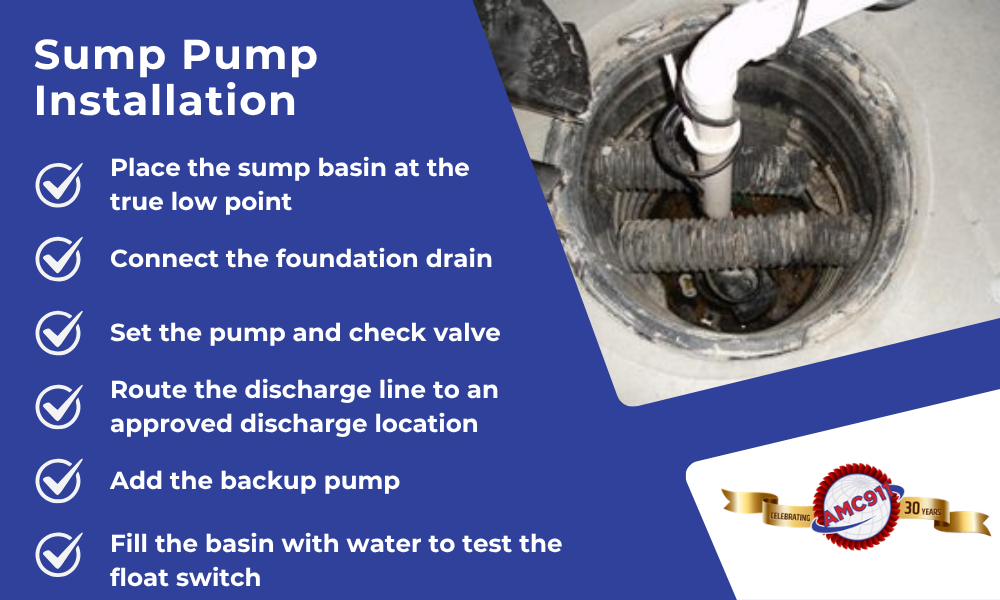
Professional sump pump installation follows a clear method:
- Place the sump basin at the true low point
- Connect the foundation drain
- Set the pump and check valve
- Route the discharge line to an approved discharge location
- Add the backup pump
- Fill the basin with water to test the float switch
Proper maintenance keeps the system ready. Pour a bucket of water into the sump a few times a year to confirm the float switch activates, and keep the pit clear of debris so the float moves freely. The International Association of Certified Home Inspectors (InterNACHI) recommends annual sump pump maintenance and warns homeowners never to reach into the pit while testing the unit.
Many sump pumps last around seven to ten years, depending on their workload and maintenance. If yours is approaching that age, have it evaluated before storm season, not after.
Professional sump pump work offers correct placement, code-compliant discharge, and warranty coverage. Every AMC911 sump pump installation is designed by our in-house engineering team and installed by our own crews, never subcontractors.
Making the Right Choice for Your Home with AMC911
A sump pump is what’s standing between your home and the next big storm. The good news is that a properly installed sump pump system with a battery backup is one of the most important parts of a complete basement or crawl space drainage system.
AMC911 is family-owned, locally operated, and has served Hampton Roads homeowners since 1993. We hold an A+ rating with the Better Business Bureau, and every project is designed by our in-house engineering team. Our own crews handle everything from waterproofing to foundation repair, so you never have to juggle multiple contractors.
Don’t wait for the next heavy rain. Contact AMC911 today to schedule a free inspection.