
The Short Answer: Stair step cracks are diagonal cracks that form in a staircase pattern through concrete block or brick foundations, typically indicating foundation settlement, shifting, or external pressure against the wall. While hairline cracks may be cosmetic, cracks wider than ¼ inches are serious structural concerns that require prompt professional evaluation and repair.
Does your home’s foundation have cracks? If so, you may be wondering if they’re a serious problem. Some cracks may be just a cosmetic issue, while others can be a sign of structural damage and other serious foundation issues. Being able to identify minor and major stair-step cracks can help you protect your foundation and address issues quickly.
What Are Stair Step Cracks?
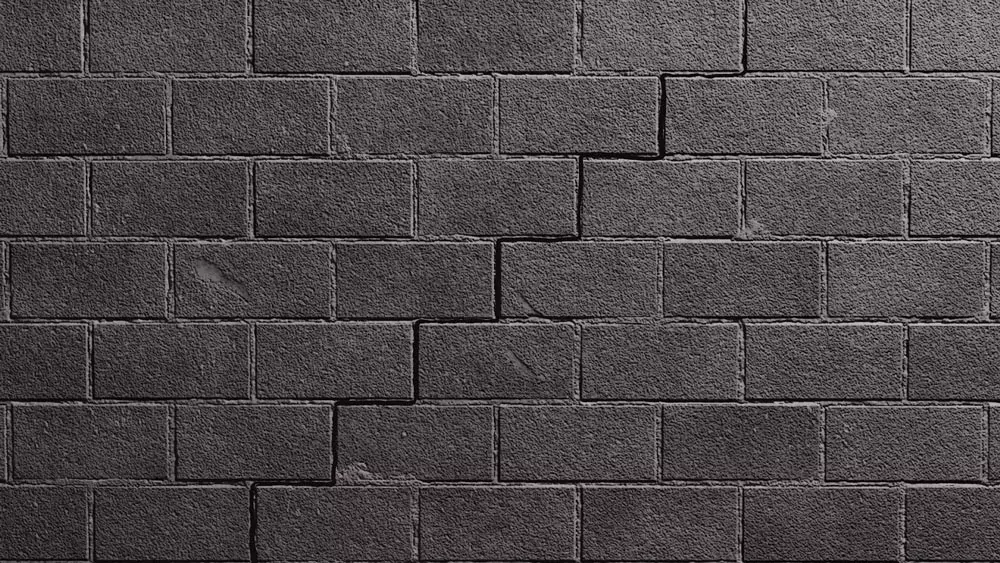
Stair step cracks usually form in concrete block foundations. It is named this way because the cracks resemble a staircase pattern ascending through the concrete blocks.
Step cracking is usually a sign of foundation failure. It often arises due to external pressures against the wall, causing it to bow inward. When the pressure on the wall exceeds its resistance, cracks start forming in a step-like pattern.
Are Stair Step Cracks Serious?
Generally, you may need to hire a foundation crack repair expert to determine whether the cracks are serious or not. If the cracks are only visible along the mortar joints or are less than 1/8-inch wide, they may be cosmetic cracks only and not be a cause for concern.
However, if you notice any of the following signs, you should contact a professional as soon as possible:
- The cracks exceed ¼ inch in width
- The wall is bulging or bowing
- The stair step pattern is uniform and repetitive
- The concrete blocks seem displaced or damaged
If you see any of these signs, it’s time to call a foundation professional. The sooner you do, the less likely your foundation will need extensive repairs.
What Causes Stair-Step Cracks?
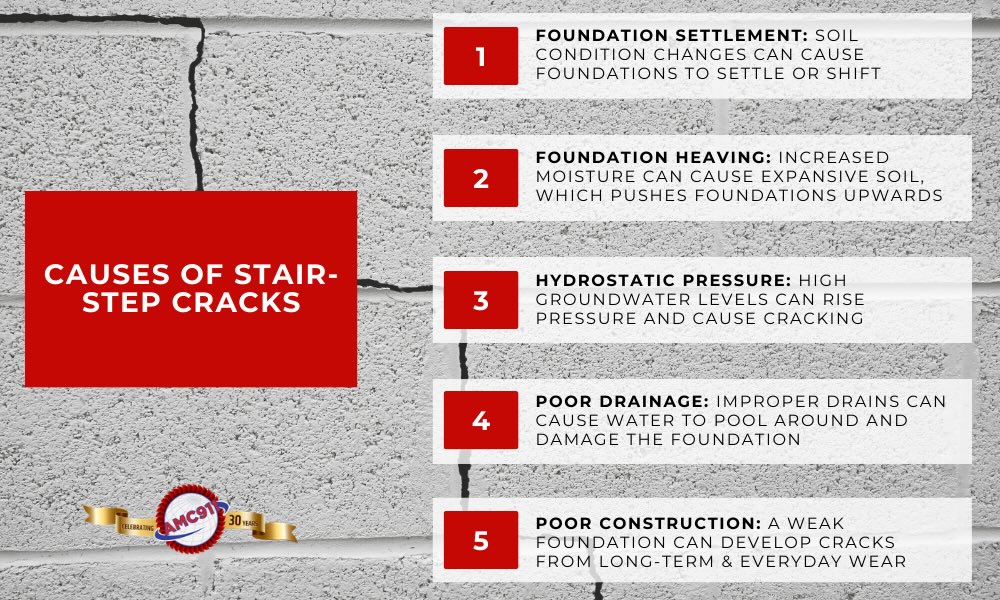
Some of the underlying causes of foundation cracks include:
Foundation Settlement And Shifting
When constructed, a building’s foundation is designed to stand on stable ground. However, soil conditions can change over time due to various factors, leading to settlement or shifting.
If the soil under the foundation was not adequately compacted before construction, it might compact over time under the weight of the building. This weight can cause the foundation to settle unevenly, which is referred to as differential settlement. Differential settlement can create stress on brick or concrete block walls, manifesting as stair-step cracks. These cracks indicate that parts of the foundation have moved relative to each other.
Foundation Heaving
Foundation heaving is the upward movement of the foundation caused by expansive soil, usually due to increased moisture levels. Clay soils tend to absorb large amounts of water, swelling significantly in the process. When the water content decreases, they shrink back, which can cause heaving and settling cycles, a property known as shrink-swell behavior or capacity.
Additionally, if the water in the soil freezes, the soil can expand. This frozen water pushes the soil upward, and this upward soil movement can crack the foundation and walls and create stair-step cracks.
Hydrostatic Pressure
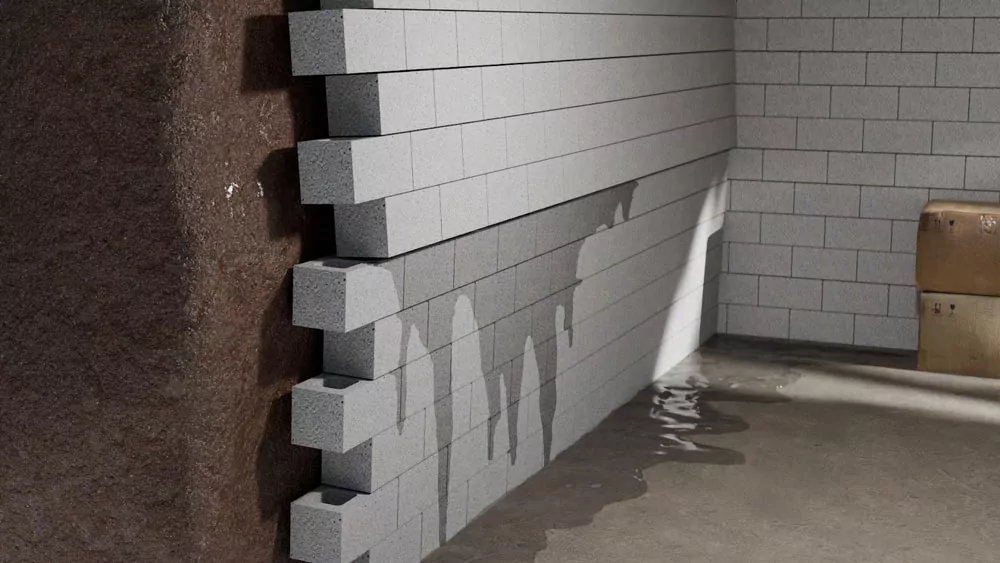
Hydrostatic pressure is the force exerted by standing water in the soil around a foundation. High levels of groundwater or poor drainage can increase this pressure. As the pressure builds, it can push against foundation walls, leading to bulging, cracking, and ultimately stair-step cracks. Left untreated, this can compromise the structural integrity of the building.
Poor Drainage
Improper drainage systems can result in water pooling around the foundation. When water is not effectively channeled away from a building, it can accumulate in the surrounding soil.
The combined effects of soil erosion, expansion, and increased hydrostatic pressure due to poor drainage can result in significant movement of the foundation. This movement manifests in the form of stair-step cracks.
Poor Construction
The longevity and durability of a foundation are highly dependent on the quality of its construction. Poor construction practices can make a foundation more susceptible to cracking and movement.
Foundations require proper reinforcement with rebar or steel mesh to handle stresses. Inadequate reinforcement can lead to cracks. If the concrete foundation mix is too weak (e.g., wrong proportions of cement, sand, and aggregate), it can lead to a weak foundation. Concrete also needs to be adequately cured to gain strength.
Over time, a poorly constructed foundation may develop cracks due to everyday stresses and loads. Stair-step cracks can appear as parts of the foundation shift or settle, compromising the stability of the structure.
Why Do You Need To Address Stair Step Cracks Immediately?
Structural Integrity
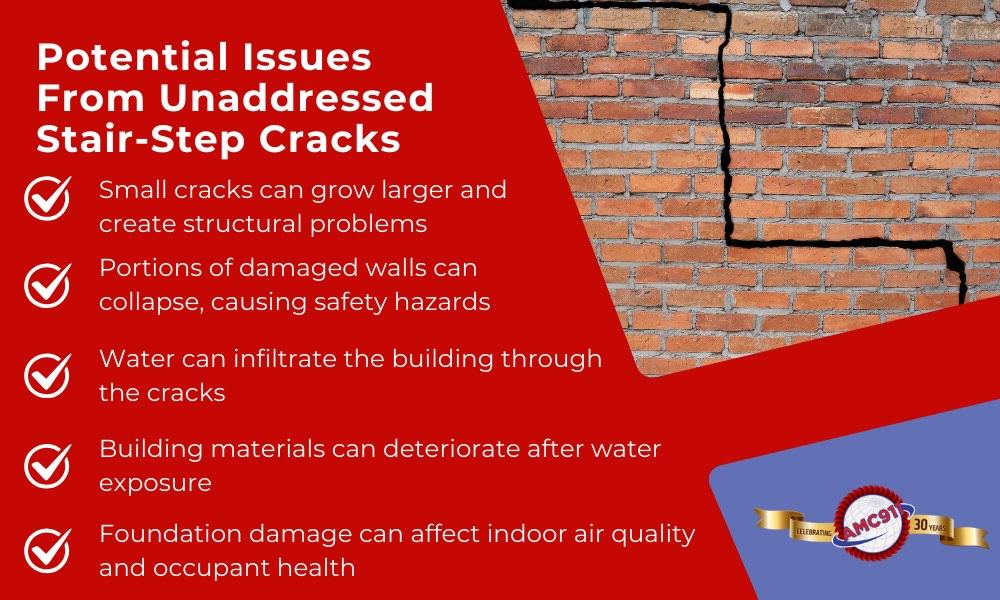
Stair-step cracks often indicate underlying structural issues, such as foundation settlement or wall movement.
If you ignore these cracks, it can lead to:
- Increased Damage: Over time, small cracks can grow larger and compromise the overall stability of your structure.
- Safety Hazards: Severe structural failures could potentially result in portions of the wall collapsing, posing a significant risk to you as an occupant.
Water Infiltration
These stair-step cracks create pathways for water to enter your home or building, leading to:
- Moisture Problems: Water infiltration can cause mold and mildew to thrive, which can affect indoor air quality and cause health issues.
- Material Degradation: Continuous water exposure can lead to the deterioration of building materials, like wood rotting or metal rusting, which can be costly to repair.
How Can You Tell If A Foundation Crack Is Structural?
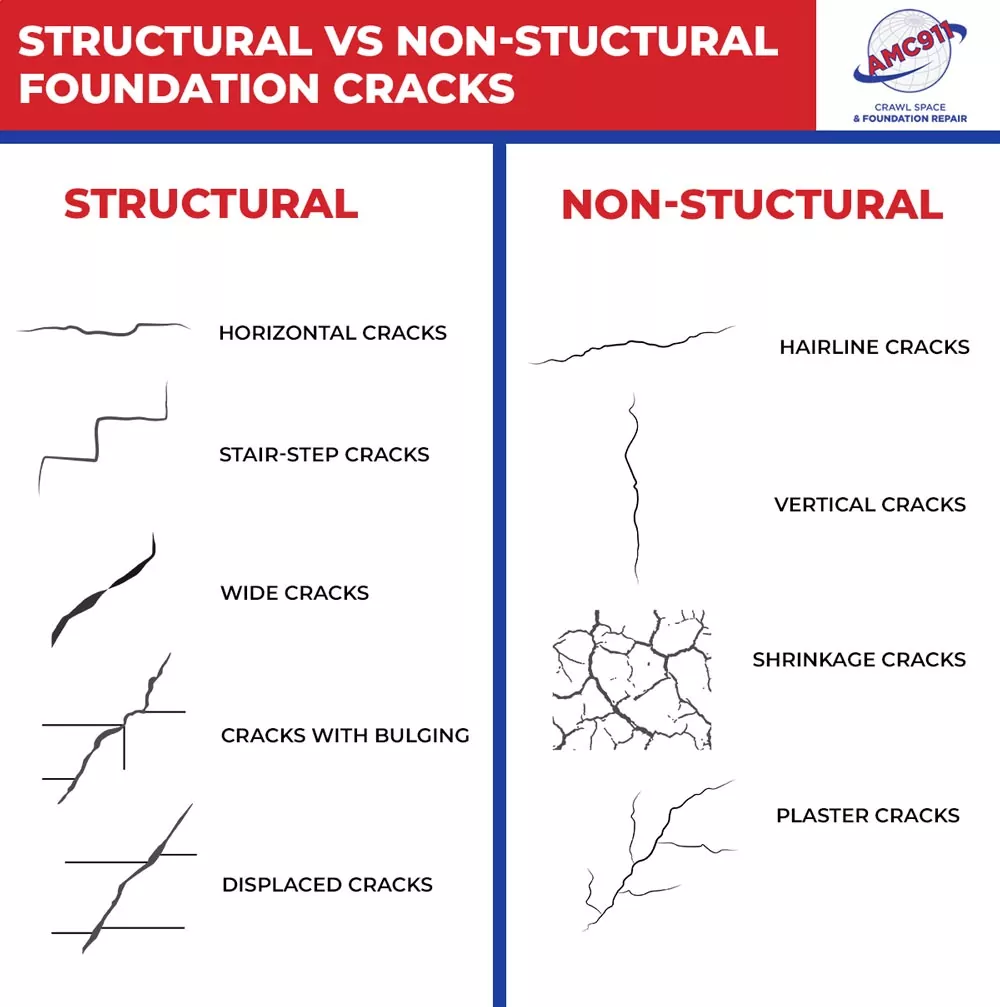
Non-Structural Cracks
Non-structural or normal cracks typically result from natural settling, shrinkage, or minor shifts in the foundation. These cracks usually pose no immediate threat to the structural integrity of the building.
Here are some characteristics of non-structural cracks:
- Hairline Cracks: These are thin cracks less than 1/8 inch wide that usually occur during concrete’s natural curing process.
- Vertical Cracks: Cracks that run vertically or at a slight angle and are generally narrow commonly signify the normal settling of the house.
- Concrete Shrinkage Cracks: Typically found in poured concrete walls, these narrow vertical foundation cracks are caused by the concrete shrinking as it cures.
- Plaster Cracks: These are fine cracks that appear on plastered surfaces, often resulting from the drying or curing process of the plaster. They do not affect the structural integrity of the wall but may need to be repaired for aesthetic purposes.
Structural Cracks
Structural cracks are more serious since they can threaten the integrity of the building.
Here are some characteristics of structural cracks:
- Horizontal Cracks: These cracks run horizontally along the foundation wall, often indicating pressure build-up from the soil outside the foundation. Such cracks can compromise stability and demand immediate attention.
- Stair-Step Cracks: Commonly found in concrete or brick walls, these follow the mortar joints in a staircase pattern and can indicate foundation movement.
- Wide Cracks: Cracks wider than 1/8 inch (or 3mm), especially if they show signs of displacement (one side is higher or lower than the other), are often a sign of severe foundation movement.
- Cracks with Bulging: Any cracks accompanied by a bulging or bowing foundation wall point to severe structural issues, usually caused by soil pressure or water infiltration.
- Displaced Cracks: Cracks where one side is higher than the other, indicating differential movement in the foundation. This type of crack often signals a serious issue needing immediate professional assessment.
If You See A Stair Step Crack, Contact A Professional
If you see stair-step cracks in your foundation, it’s important to contact a professional right away. Stair-step cracks are usually signs of serious structural problems that must be addressed. If you catch the problem early, it will cost less to repair.
At AMC911, we proudly serve Virginia Beach, Chesapeake, Norfolk, and the nearby areas with top-tier crawl space and foundation repair services. If you ever encounter an issue with your foundation, such as a stair-step crack, reach out to us for a free inspection estimate today.